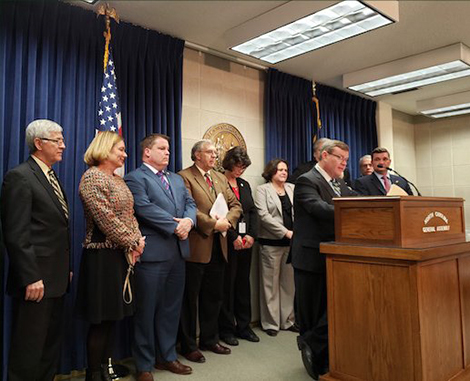
House unveils $1.9-billion school construction bond bill | Eastern NC Now
Of that money, $1.5 billion would go to public schools. Community colleges would get $200 million, and the state's universities would receive the remaining $200 million.


 |
"They don’t want you to do is dig into their 'reporting' for bias and conflicts of interest."
Published: Tuesday, October 13th, 2026 @ 6:27 pm
By: Daily Wire
|
 |
“We have no way of knowing if Jesus really existed..."
Published: Tuesday, October 6th, 2026 @ 11:01 pm
By: Daily Wire
|
 |
“Ignorance is costly."
Published: Sunday, October 4th, 2026 @ 2:49 pm
By: Daily Wire
|
 |
The tour bus will make 63 stops across 13 states across the country, and will end on Election Day in November.
Published: Tuesday, September 29th, 2026 @ 9:19 am
By: Daily Wire
|
 |
Organizations are quietly using foreign money to move the needle toward their preferred political outcomes.
Published: Friday, September 25th, 2026 @ 2:08 pm
By: Daily Wire
|
 |
Democrats are still calling Israel the biggest foreign lobby in America — and they’re using it to win the 2026 midterms.
Published: Tuesday, September 22nd, 2026 @ 4:03 pm
By: Daily Wire
|

 |
"Elections are about choices."
Published: Thursday, September 17th, 2026 @ 4:06 pm
By: Daily Wire
|
 |
Chief Justice John Roberts issued an administrative stay allowing the Trump administration to continue construction of the ballroom as SCOTUS waits.
Published: Tuesday, September 15th, 2026 @ 11:28 pm
By: Daily Wire
|
 |
The baby's parents blame Texas AG Ken Paxton for turning the case into "political theater."
Published: Monday, September 7th, 2026 @ 9:15 am
By: Daily Wire
|
 |
Raleigh, N.C. — North Carolina State Board of Elections Executive Director Sam Hayes welcomes Allen Norfleet to the agency’s campaign finance leadership team.
Published: Sunday, August 23rd, 2026 @ 2:35 pm
By: ENC NOW
|
 |
n Aug. 17, President Donald J. Trump endorsed state Rep. Jennifer Balkcom, R-Henderson, who Republicans recently tapped to replace US Rep. Chuck Edwards on the ballot, to represent NC-11 in the upcoming 2026 mid-term election.
Published: Sunday, August 23rd, 2026 @ 11:02 am
By: Carolina Journal
|
 |
Prominent Democrats have fueled this climate with reckless rhetoric.
Published: Saturday, August 22nd, 2026 @ 6:16 pm
By: Daily Wire
|

 |
They refuse to be silenced despite threats and disappearing work.
Published: Tuesday, August 18th, 2026 @ 8:52 am
By: Daily Wire
|