Publisher's note: This article appeared on John Hood's daily column in the Carolina Journal, which, because of Author / Publisher Hood, is linked to the John Locke Foundation.
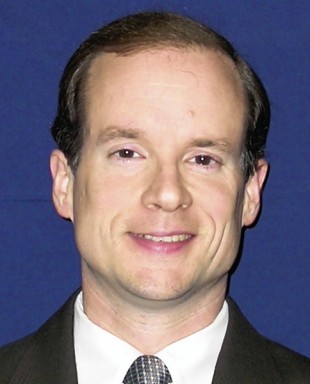
John Hood, president of the John Locke Foundation.
RALEIGH — A few weeks ago, I
wrote that partisan control of the U.S. Senate may well be determined here in North Carolina, where Democratic incumbent Kay Hagan suffers from low job-approval ratings and a close association with unpopular President Barack Obama.
Now, with early voting underway and two televised primary debates behind us, I'll update my previous analysis with these notes:
- North Carolina remains a pivotal state in the nationwide battle between Democrats and Republicans. As I write this, RealClearPolitics uses a simple set of polling averages to project a 50-50 split in the U.S. Senate after the November elections, with Hagan winning reelection (albeit narrowly). I'm not sure I buy this simple projection as the most likely scenario, given that it assumes Republican Sen. Mitch McConnell gets defeated in Kentucky and U.S. Rep. Tom Cotton fails to win the Arkansas Senate seat for the GOP. But it is a conceivable scenario.
ElectionProjection.com, run by North Carolina-based analyst Scott Elliott, is a bit less sanguine about the Republican Party's national prospects — its current projection is a 51-49 Democratic majority after November — but it also assumes Hagan loses. So does USElectionAtlas.com. Larry Sabato's Crystal Ball, on the other hand, treats a four-seat Republican gain (without North Carolina) as the low end of the projection range, with an eight-seat gain as the reasonable high-end gain.
It's obviously way too early to make confident predictions about the November races. Once primary voters in North Carolina and elsewhere make their picks, the election-matchup polls become a lot more useful. Still, the takeaway from all this is that both parties are going to treat North Carolina as one of the two or three key battlegrounds this year.
- Speaking of the primary, as I indicated in my earlier column, using polls from March or early April to project the impossibility of Thom Tillis avoiding a runoff was never a sensible reading of the evidence. Many Republican primary voters simply weren't paying much attention to the GOP field until recently. They were enthusiastic about voting Kay Hagan out but not all that particular about whom they'd vote in. Now they are following the news and watching or hearing the ads. In Survey USA's latest flash poll for the Civitas Institute, the effects are unmistakable: a decisive turn in favor of Tillis as undecided voters break disproportionately for him over the other candidates.
That's just one poll result, however. I'm sure we'll see two or three additional polls published early next week. If they look anything like the Civitas/SUSA sample, however, Democrats will be pulling their hand out. They had counted on a brutal, expensive runoff primary to damage the eventual Republican nominee.
- This week's televised debates — one by Time Warner Cable News and the McClatchy newspapers, the other by WRAL-TV in Raleigh — have done little to influence the primary race. Likely Republican primary voters who either tuned in to the broadcasts or consumed the subsequent media coverage found four conservative Republicans offering similar opinions about some (but by no means many) issues of interest to Republican voters.
No one made a serious mistake. And no one earned a lifetime achievement award from
Toastmasters International.