The second group was the Nationalists, who pushed for a strong centralized "national" government and was against sharing of power with the states. Its most vocal proponent was James Madison. It would have a national executive branch, a national legislative branch, and a national judiciary branch. There would be little or no deference or respect for the states. Specifically, Madison wanted a strong centralized (power centralized in the government) modeled after his state of Virginia and largely dominated by officials from Virginia. In fact, Madison arrived at the Convention several days early in order that he would have time to draft a series of proposals on which he believed the Constitution should be based. His intention was to introduce the other delegates to his proposals and then vote on them and ratify them. His series of proposals was known as the "Virginia Plan." Initially the delegates voted on the plan in approval but as the days and weeks went on, they overwhelmingly discarded it for the federalist system.
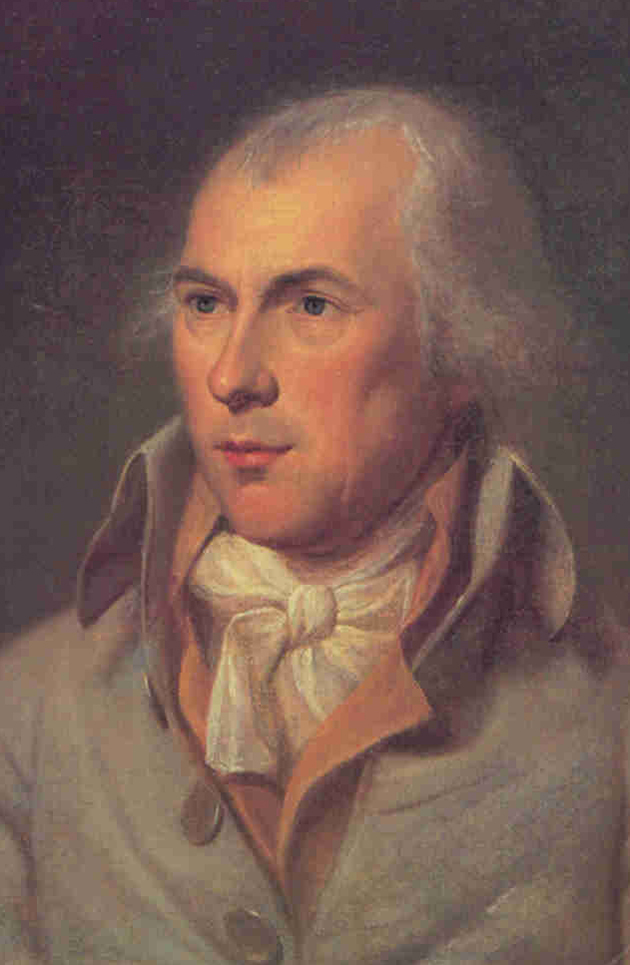 James Madison
The third group was the Federalists, who luckily won the day at the Convention. They wanted the states to retain their sovereign power. Consequently, their system was one that divided the powers of government between the central government and state and local governments. This was obvious in the limited powers of the government, in the make-up of delegates in the legislative branch, including the election of Senators by the individual state legislatures rather than the people, the amendment process, and the jurisdiction assigned to the federal court system.
The issue on the mind of almost every representative at the Constitutional Convention was what kind of government was best for the new republic. Certain states submitted plans for a republican government, however, the most popular was the plan submitted by the Virginia delegation lead by James Madison (and including George Mason, Edmund Randolph, and even George Washington). The Virginia Plan, embracing a "nationalist" scheme, called for a government with three distinct branches: legislative, executive, and judicial. Using Montesquieu's theory of checks and balances it was intended to ensure that no group could have too much authority, which could lead to tyranny. Although the delegates supported most of the proposed principles of the Virginia Plan, they were in disagreement in certain areas of the plan. The highest debate concerned the section on representation in the legislative branch. The Virginia Plan proposed that representation in the legislatives houses would be based on population of the state. Small states objected saying that it would leave them helpless in a government dominated by larger states.

After the Virginia Plan was introduced, New Jersey delegate William Paterson asked for an adjournment to contemplate the Plan. Under the Articles of Confederation, each state had equal representation in Congress, exercising one vote each. The Virginia Plan threatened to limit the smaller states' power by making both houses of the legislature proportionate to population. On June 14-15, 1787, a small-state caucus met to create a response to the Virginia Plan. The result was the New Jersey Plan, to represent the interests of the small states.
Under the New Jersey Plan, the existing Continental Congress would remain (equal representation of states in Congress), but it would be granted new powers, such as the power to levy taxes and force their collection. An executive branch was created (multi-person executive), which would be elected by Congress. Executives would serve a single term and would be subject to recall on the request of state governors. The plan also created a judiciary that would serve for life, to be appointed by the executives. Lastly, any laws set by Congress would take precedence over state laws. When Paterson reported the plan to the convention on June 15, 1787, it was ultimately rejected, but through its proposal, the smaller states were at least able to make their issues and concerns known.
Alexander Hamilton proposed his own plan. It was known as the British Plan, because it so strongly resembled to the British system of a strong centralized government and a leader, called a "Governor," who would be elected by electors (chosen by the people) to serve a life-term. This "Governor" would have an absolute veto power over bills. In his plan, Hamilton advocated eliminating state sovereignty and consolidating the states into a single nation. The plan featured a bicameral (2-chamber) legislature, with the lower house elected by the people for three years and the upper house elected by electors who would serve for life. Not only would a national legislature appoint state governors, but it would have complete veto power over any state legislation.
Hamilton presented his plan to the Convention on June 18, 1787, but it was immediately rejected because it resembled the British system too closely. The states had just found a war for its independence from that system. More importantly, it was rejected because it abolished state sovereignty.
A compromise, known as the Connecticut Compromise (forged by Roger Sherman from Connecticut), was proposed on June 11 which would blend the Virginia (large-state) and New Jersey (small-state) plans and thus combine the important elements of both. Sherman suggested a two-house national legislature, but proposed "That the proportion of suffrage in the first branch [house] should be according to the respective numbers of free inhabitants; and that in the second branch or Senate, each State should have one vote and no more." The compromise was rejected at first, but on July 23, the representation in both houses was finaly settled (with 2 Senators per state).
Another area which caused much deliberation was the issue of Slavery. It turned out to be the most controversial issue confronting the delegates. Slaves accounted for about one-fifth of the population in the American colonies. Most of them lived in the Southern colonies, where they made up 40% of the population.
There were three slavery-related issues which were very hotly debated at the Convention - (1) One was the question of whether slaves would be counted as part of the population in determining representation in Congress or merely considered property and not entitled to representation; (2) Another was the question of the slave trade and what to do with it; and (3) And the most important was whether slavery should be abolished altogether in the formation of a United States.
With respect to the first issue, a bitter debate resulted over whether or not blacks should be added equally with whites in the computation of the population Delegates from states with a large population of slaves wanted the slaves to be used to their benefit. As such, they wanted slaves to be considered persons in determining representation (to boost their representation in Congress) but as property for the purposes of apportionment of taxes in relation to the state's population (ie, for the purposes of the government levying taxes on the states on the basis of population). Delegates from states where slavery had disappeared or almost disappeared argued that slaves should be included in taxation, but not in determining representation. Finally, delegate James Wilson (from Pennsylvania) and Roger Sherman (from Connecticut), proposed the Three-Fifths Compromise, which was designed to meet the demands of both sides. Recognizing the desire of the South for power and influence in government and wanting to provide an incentive for those states to ratify the Constitution, the three-fifths compromise allowed the government to count slaves only as partial people - each slave would count as "three fifths of all other persons" (Article I, Section 2, addressing representation in Congress and apportionment of taxes). [While the idea of counting each slave as less than a whole person may have sounded cruel, the purpose was to force the Southern states to abolish slavery.... The idea was that if they wanted greater representation in Congress, they would have to abolish slavery !) The Compromise was eventually adopted by the Convention.

Another issue at the Convention was what should be done about the slave trade. All states except two had already adopted provisions in their state constitutions to abolish slavery outright or to outlaw the importation of slaves or to phase it out. (North Carolina has already outlawed the importation of slaves). Georgia and South Carolina threatened to leave the Convention if the slave trade was banned outright. The delegates constantly worried that the Constitution they ultimately drafted would not be ratified by the individual states and so, in order that the southern states would not prevent the ratification, the issue of the slave trade was postponed. A compromise of sorts was worked out. Article I, Section 9, subpart 1 lists those "Powers which are Forbidden to the Congress" or rather "Limits on Congress" and subpart 1 was drafted to read: "There will be no prohibition of slavery before 1808." In other words, Congress would have no power to address the issue of the importation of slaves until the year 1808 (20 years from the signing of the Constitution).
The same concerns over the regulation of the slave trade applied to the discussion of abolishing slavery outright under the new Constitution. The delegates did not want to frustrate the adoption of a binding Constitution by alienating the southern states. Their support was desperately needed. The matter of slavery caused such a conflict between the northern states and the southern states that several southern states refused to join the Union if slavery was not permitted under the Constitution. Three states initially had a problem with abolishing slavery - Georgia, South Carolina, and North Carolina. And it wasn't that they didn't believe that slavery was morally wrong or that it should be abolished. They were more concerned about their local economies. These states struggled with the question of how they could achieve a smooth transition from an agricultural economy based on slavery to one that would not be dependent on slavery. They really wanted time to figure out how to gradually phase out slavery so that their economies would not suffer. North Carolina eventually admitted it was willing to discuss options and would be willing to agree to the abolition of slavery, but South Carolina and Georgia were not willing to give up their slaves at that time. Article I Section 9 subpart I reflects the discussions by the delegates, including those from the South, regarding the eventual transition from slavery.
George Mason of Virginia felt so strongly that it was an abomination for slavery to remain as the states set about to create their new nation, under the principles set out in the Declaration of Independence, that he said this: "This infernal traffic originated in the avarice of British merchants. They British government constantly checked the attempts of Virginia to put a stop to it. The present question concerns not the importing states alone but the whole Union. Maryland and Virginia have already prohibited the importation of slaves expressly. North Carolina had done the same in substance. Slavery discourages arts and manufacturing. The poor despise labor when they know there are slaves to do it. Every master of slaves is born a petty tyrant. They bring the judgment of Heaven on a country. As Nations cannot be rewarded or punished in the next world, they must in this. By an inevitable chain of causes and effects, Providence punishes national sins by national calamities."

Not all delegates were happy with the final product. 3 high profile delegates refused to sign it: George Mason (Virginia), Edmund Randolph (Virginia), and Elbridge Gerry (Massachusetts).
Diane Rufino has her own blog For Love of God and Country. Come and visit her. She'd love your company.