Publisher's note: The author of this post is Dan Way, who is an associate editor for the Carolina Journal, John Hood Publisher.
Big differences between House and Senate bills may require tough negotiations
A Senate panel passed legislation Thursday to accelerate mental health Medicaid reform and free up nearly $1 billion in frozen assets to provide more behavioral health services.
Sen. Ralph Hise, R-Mitchell, a co-chairman of the Senate Health Care Committee, presented an
amended version of
House Bill 403 that would speed the integration of mental health services and physical health care.
Such integrated care would deliver better results for less money by using Prepaid Health Plans, Hise said. The PHPs would receive a monthly fee per patient, versus the current model, which pays providers for every service they perform.
PHPs could be commercial managed care networks or organizations comprising private health care providers. Up to five PHPs would serve Medicaid and NC Health Choice recipients statewide. Four regional contracts would be issued to provider-led entities to deliver services.
The bill would hold providers accountable by developing health metrics to measure how successful they are in providing care to patients with problems resulting from mental illness, substance abuse, and intellectual or developmental disabilities.
Hise called it "a Herculean task" for the state Department of Health and Human Services to implement the reforms in a two-year period. He wasn't willing to wait the six years the House version of the bill allows to reform the system, improve services, and achieve improved health outcomes.
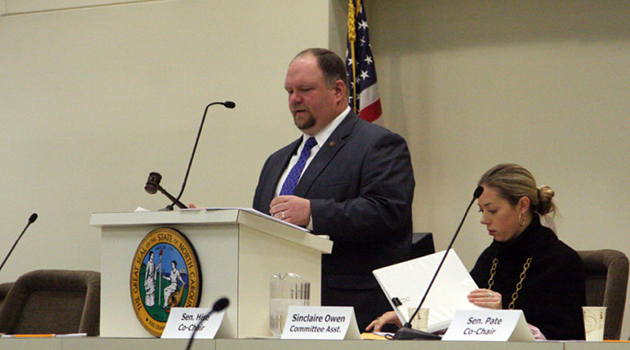
Sen. Ralph Hise, R-Mitchell, calls to order a March 15 meeting of the Senate Health Care Committee. (CJ photo by Dan Way)
Sen. Tommy Tucker, R-Union, said he's not as critical of the current LME/MCO structure as Hise. Originally there were 11 area LME/MCOs administering the services. They were consolidated to seven.
Tucker called Cardinal Innovations, the largest of the seven, "a rogue group," and said he was "appalled at
the audit" recently released by the State Auditor's Office. It found numerous examples of extravagant spending.
The original House bill created the six-year transition plan. It passed on a 109-0 vote. Tucker said DHHS supports that bill, and state Rep. Donny Lambeth, R-Forsyth, a primary sponsor of the legislation, told him the House would not approve Hise's version.
Hise said the differences would be resolved in conference committee if the House doesn't concur with the Senate changes. Those include plowing nearly $1 billion in reserve funds the LME/MCOs have built up back into much-needed services.
He said the Senate version would reimburse medical providers at 90 percent of Medicaid rates for treating patients out of network. They aren't now required to pay out-of-network providers.
Projections are that several LME/MCOs would fail within the six-year House transition period, Hise said. They are losing money on Medicaid patients.
Without the more immediate reforms in the Senate bill, the state would enter into a series of costly, inefficient patchwork fixes over the next six years to keep the system functioning, he said.
Another benefit to the Senate bill, Hise said, is that if one of the organizations goes belly-up, others will vie for the contract. The current system doesn't allow such a continuity of services, he said.
If the state wanted to shut down an ineffective organization, the entity could tie the state up in lawsuits for years under the current structure, Hise said. The Senate bill would eliminate that potential.
Sen. Mike Woodard, D-Durham, expressed worry that the Senate bill would take money and employment for rural hospitals. Hise said there's no reduction in spending, and savings on overhead and administrative costs should make it possible to add jobs.