The time has come to put a stop to government officials abusing their power | Eastern NC Now
Every official should be held accountable and immunity must be constricted

As any well taught eighth grader knows, our system of government is a republic. That is, We The People elect people to do the business of government. But the reality actually is that more government decisions that directly impact us, our family and our businesses are not made by elected officials. They are made by appointees and bureaucrats. And many of these decisions are made by unaccountable individuals, many times and they have devastating consequences on people’s real lives.
We have seen countless examples of this in recent years coming from the U. S. Department of Justice and the FBI in particular. Recently we have seen abuse of power by one of the most powerful officials in Raleigh in having an illicit sexual affair with a state employee who got extraordinary salary increases while the affair was going on. And that official still holds a high level of public trust. Because most in the public simply shrug and chalk it up to “the way things are done up there” we see no accountability.
Everywhere we look now days it seems we see corruption and abuse of power at all levels of government.
The Carolina Journal has an article about just such an abuse of power by appointed local government officials. The story is repeated over and over again all across this great state.
The framework within which this abuse and corruption take place is usually with how government regulations are administered. Note that wording. The issue is not the regulations but rather how they are administered. That’s why we say “corruption.” By corruption we mean the operation of government contrary to the way it is supposed to operate. This operation of government is not how it should be done. Applying for a construction permit is an example. Closely associated are the issues that surround property development.
The instant case deals with land use planning within a municipality's zoning jurisdiction (which is often larger than the municipality itself). Elected officials, who ostensibly are accountable to the voters, adopt land use plans. They then appoint committees and hire bureaucrats to administer those land use plans. The procedure is typically implemented via permits.
All is well and good to this point, usually. The problem comes when appointed officials pass judgment on the permit applications. They are supposed to make those judgments in accordance with principles of law, such as decisions based on actual evidence presented to them in the review process. The corruption comes when these officials jump the tracks and make arbitrary, capricious and/or discriminatory decisions.
The fundamental problem comes in how these abuses or corruptions are handled.
First, they are often unknown or unseen by the public. Go to a Planning Board meeting and observe their actions. Look around to see who's there. As often as not, you can count the audience on one hand. The first problem you have is finding out when, where and about what the board is going to meet. Then, heaven help you if you (as we reporters face daily) ever want to know what happened and why a particular decision was made by the board. Many do not keep minutes that disclose the essentials of the decisions made. Often it is purely a matter of the bureaucrat assigned to the board writing the applicant a letter telling them their application has been denied.
The citizen/applicant is alone, usually, in the process. Few people care about the issue so the public exercises no oversite or accountability. The press seldom covers the procedures simply because resources do not allow them to and the public apathy does not justify the devotion of limited media resources to keep the public informed.
The problems inherent in this system are legion. And the solutions are daunting.
Consider the case of Schooldev East v. Town of Wake Forest as reported by the Carolina Journal.
This would appear at first blush to be a simple issue. A group of parents, in 2020, wanted to open a charter school in the Town of Wake Forest. To do so the developer who was going to build the school had to get the necessary permits. They dutifully applied. There were some issues raised about sidewalks and bikeways and the developer amended their plans to address those requirements. The permit was denied, nonetheless.
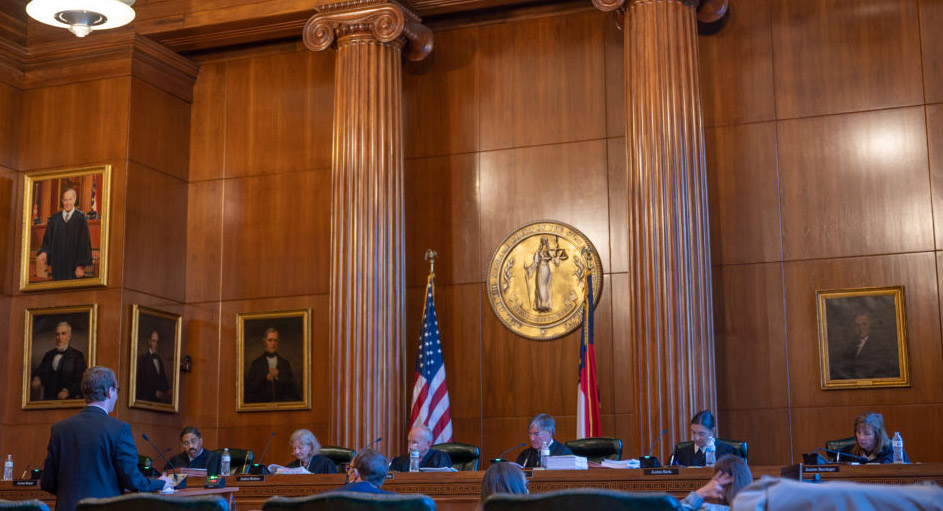
The school lawyered up and filed an appeal, the first in a long road to the N. C. Supreme Court. That court has yet to schedule the case. It is three years and counting. The school has since opened at another site in Franklinton.
Turns out that the real issue was not the land use plan but rather what the parents wanted to do in the building. They wanted to operate a charter school. The evidence shows that some of the officials who blocked the school are opposed to school choice. This was confirmed by the evidence in the case.
Now it gets really interesting. This is no longer case of a group of parents who were abused by corrupt local government bureaucrats and officials but rather the really Big Elephant has now entered the room.
The N. C. Homebuilders Association has entered the case at the Supreme Court level.
You can read the Carolina Journal’s story here.
We suspect that Wake Forest will lose this case. But it probably does not care. They achieved their objective of keeping this evil out of one of the fastest growing towns in the state. And the Home Builders picking up the legal bills will save the school a boatload of money. It remains to be seen if the school will try to go back to Wake Forest.
This is actually a very typical case of how local government works in this state. No town or city has the authority to decide whether school choice is a good public policy or not. But most everyone has an opinion about it. The point is, it is a corruption of the land use planning process for a planning department or board to try to prevent a particular kind of legal activity to operate within a specified zoning district, assuming the zoning requirements are otherwise met.
A municipality here in Beaufort County (the Town of Chocowinity) a few years ago struggled with the issue of roadside vendors who would put out tables, canopies etc and sell products out of the back of a pickup truck. At the time there were no regulations that prohibited this activity. But it does not happen today. Ever wonder why? Or do you even care? And if you are a registered voter in Chocowinity have you ever considered this issue when you went to vote for town board members or the mayor?
But Wake Forest and Chocowinity are by no means unique in this regard. Most media reporters who cover local government can cite you case after case of abuse and corruption of government power such as this. You will likely recall fights such as the Wake Forest case over school choice with a long list of judicial fights over massage parlors, or more recently tobacco/vape shops and video poker.
A real problem in all of this are the local judicial systems. They are the instruments that are supposed to protect property rights but don’t. (We use the plural because there is indeed a dual system of justice). It matters WHO you are if you appeal a decision of these planning officials. But the local judiciary is often as bad in protecting citizen’s rights as are the planning bureaucrats.
An example of this is a local district court judge (Michael Paul) who rendered a decision in a dispute with a homeowner’s association. The property deeds and covenants upon which the HOA was operated provided that the HOA would furnish water to the homeowners. They did so for over two decades, until county water became available. However, even after the HOA water system was abandoned, the HOA did not reduce the dues by the portion of the budget that had been devoted to operating the water system. When the case came before Judge Paul he ruled that the HOA did not have to provide water but that the property owners must pay their own water bills to the county. The problem with this ruling was that Judge Paul substituted his opinion for who should be responsible for the water, notwithstanding the written provisions in the deeds and covenants.
So what is the solution? We think public officials, bureaucrats and judicial officials should be held accountable for abuse of power. That would require a change in the immunity public officials have but we think the time has come that they should be held liable.
We’ve seen in the case of former President Donald Trump how corrupt prosecutors abuse their power and suffer no consequences personally when that abuse is uncovered.
The time has come to put a stop to these abuses of power.













Corruption is probably not as prevalent, or as sinister as it is in all of the Deep Blue states, but that is still no excuse for there existing any corruption whatsoever. The exercise of corruption, where it exists, must be first exposed, and then eradicated as is most unwanted vermin, especially here in the Old North State.