Only non-thinking people think a computer can think | Eastern NC Now
If you are like me, you probably hate what has come to be known as "Click Bait." That is when you see a title so outrageous that you click on it to see what the hell extreme about the subject.
Where do you stand on the Transgender Issue now that the issue has gotten to the overt point of the open celebration of this lifestyle choice, dictated by certain direct and explicit actions.
90% I do not approve of behavior that has within its expressed tenants policies that harm children.
9.17% I do support the Trans Community in all its many facets because diversity is at a premium in today's society.
0.83% What is a "Children's Drag Queen Story Hour?"
Only non-thinking people think a computer can think
If you are like me, you probably hate what has come to be known as "Click Bait." That is when you see a title so outrageous that you click on it to see what the hell is so extreme about the subject. Nevertheless, as a budding neophyte writer dying for attention, I am not above using "Click Bait" to get some attention. Click her to leave this article now.
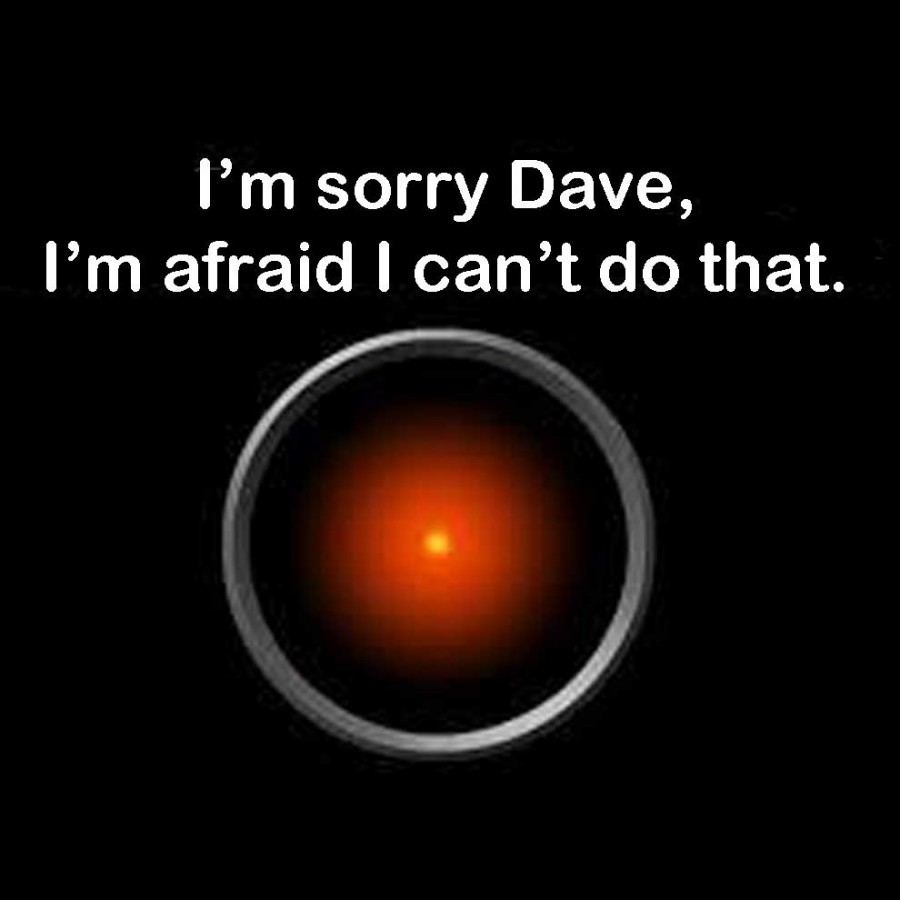
Can a Computer think? Spock would say, "That is truly illogical." Have you ever wondered why they call computer thinking "Artificial Intelligence?" Would a computer ever ask that question? Back in 1968 we were introduced to a thinking a computer named "HAL." The opening scene proffered the assumption that mankind evolved. That word evolved always starts an argument so I offer the opinion that mankind has not progressed.
My assumption is that the vast majority of what we humans think of as "Thinking" is nothing more than habit. If thinking involved the evaluation of facts, probabilities, and possible outcomes, I doubt many of us with ever get out of bed. If we ever were to develop a thinking computer, I suggest the we program it with only one response to every problem submitted to it.
The danger of writing this article in April 2017 is that it could be totally wrong in May, 2017. Heck, it could be totally wrong now. However, being wrong has never stopped me from offering a viewpoint, however misguided it may be. The fact that I can come to a incorrect conclusion is one of my main points in claiming that a computer cannot "THINK." Absent a physical breakdown or a software glitch, a computer is nothing more than a calculation machine that follows a prescribed logic course to a solution to problems. It does not make mistakes. The software makes mistakes, They are called "bugs". Someone can insert malicious software in a program. It is called a "Virus." Only us humans tend to assign human qualities to computers. I don't think that a computer actually dreams up problems to solve like we humans do.
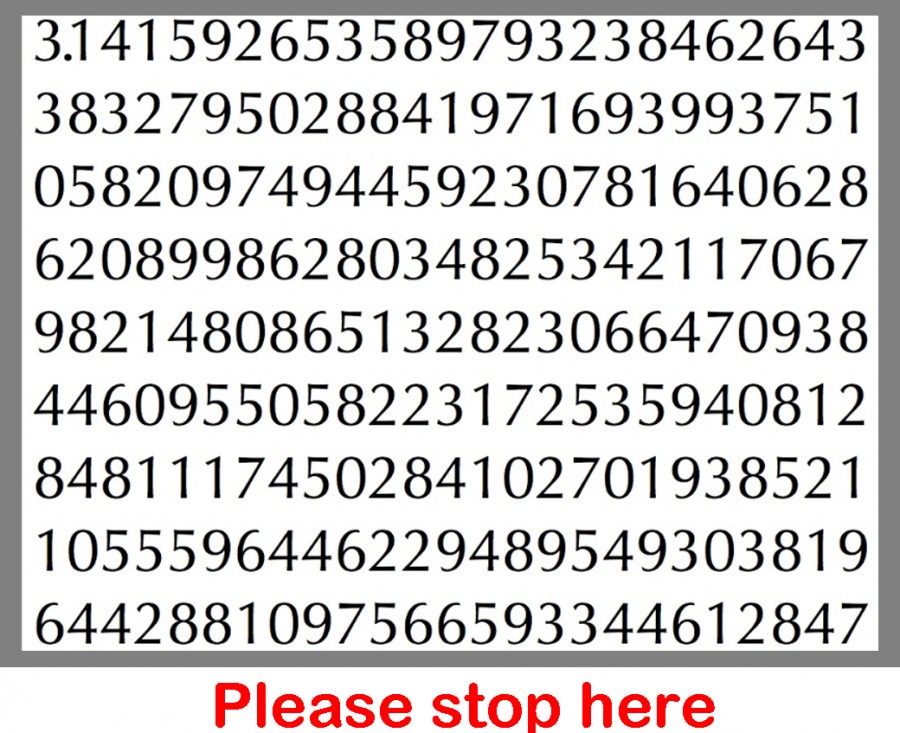
A computer operates on the simple process of yes and no. I admit it does it at amazing speed and there is an effort for parallel processing of CPU (Central processing Units) to work simultaneously on a problem while communicating with each other along the way. But in the final analysis it is just a series of switches arranged in such a way as to reach a conclusion. Without a stop parameter even the most sophisticated and advanced computer will chug along forever just trying to solve the equation 22 divided by 7.
Long ago (1950) a guy named Alan Turing ask the same question. "I propose to consider the question, 'Can machines think?''' I learned this way back in 1964 when I was taking a computer science course at DeKalb Area Vocational School. I have written about that here on BCN before. (Changing Career Path) I admit I had to do research to bring myself up to date on his essay.
Since Turing first introduced his test, it has proven to be both highly influential and widely criticized, and it has become an important concept in the philosophy of artificial intelligence.
The philosophy of artificial intelligence attempts to answer such questions as follows:
Can a machine act intelligently? Can it solve any problem that a person would solve by thinking?
Are human intelligence and machine intelligence the same? Is the human brain essentially a computer?
Can a machine have a mind, mental states, and consciousness in the same way that a human being can? Can it feel how things are?
These three questions reflect the divergent interests of AI researchers, Linguists, cognitive scientists and philosophers respectively. The scientific answers to these questions depend on the definition of "intelligence" and "consciousness" and exactly which "machines" are under discussion.
Important propositions in the philosophy of AI include:
Turing's "polite convention": If a machine behaves as intelligently as a human being, then it is as intelligent as a human being.
The Dartmouth proposal: "Every aspect of learning or any other feature of intelligence can be so precisely described that a machine can be made to simulate it."
Newell and Simon's physical symbol system hypothesis: "A physical symbol system has the necessary and sufficient means of general intelligent action."
Searle's strong AI hypothesis: "The appropriately programmed computer with the right inputs and outputs would thereby have a mind in exactly the same sense human beings have minds."
Hobbes' mechanism: "Reason is nothing but reckoning."
I will end this dissertation on computers and thinking with this conclusion:
The Turing test isn’t a test of a computer. Computers can’t take tests, because computers can’t think. The Turing test is a test of us. If a computer “passes” it, we fail it. We fail because of our hubris, a delusion that seems to be something original in us. The Turing test is a test of whether human beings have succumbed to the astonishingly naive hubris that we can create souls.
It’s such irony that the first personal computer was an Apple.
It may be of some interest that I had to do little "THINKING" to reach this conclusion. Those are not my words but a direct quote from an article from Evolution News and Science Today. Of course as a last resort we could always turn Hal off and start think for ourselves. Open the Pod Door Hal
My real question, which is simple after this belabored article:
Don't you think that we should actually try to develop the technique for humans to actually 'THINK' before we try to invent or create a computer to think for us?
I think these there robots is gonna take over the world and done be controlled by one of there commuie snowflake libtards. thats why i destroyed all my smartphons and dont allow non off them technogizmos in my house. it just isnt the american way







 The danger of writing this article in April 2017 is that it could be totally wrong in May, 2017. Heck, it could be totally wrong now. However, being wrong has never stopped me from offering a viewpoint, however misguided it may be. The fact that I can come to a incorrect conclusion is one of my main points in claiming that a computer cannot "THINK." Absent a physical breakdown or a software glitch, a computer is nothing more than a calculation machine that follows a prescribed logic course to a solution to problems. It does not make mistakes. The software makes mistakes, They are called "bugs". Someone can insert malicious software in a program. It is called a "Virus." Only us humans tend to assign human qualities to computers. I don't think that a computer actually dreams up problems to solve like we humans do.